Digital collaboration
Design a digital solution that helps remote-working teams collaborate, communicate and engage with one another in a more meaningful way.
A mobile and desktop app solution building meaningful connections in remote work environment by making people gather, share, connect in order to strengthen company culture and belonging.
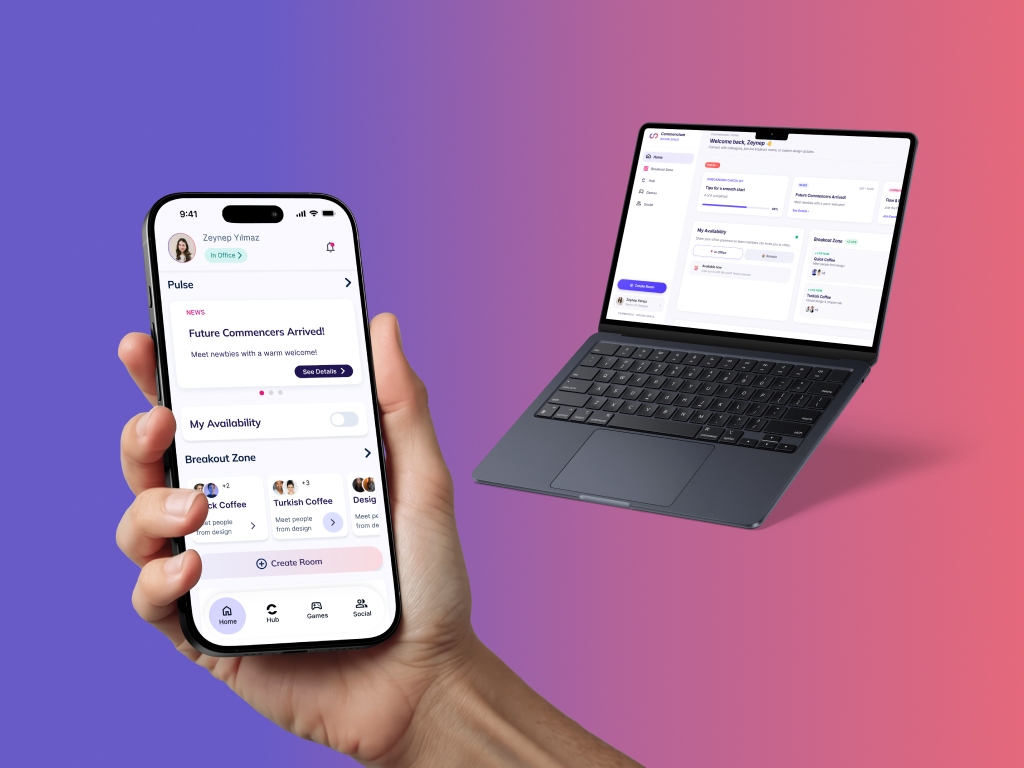
Design a digital solution that helps remote-working teams collaborate, communicate and engage with one another in a more meaningful way.
The brief asked how digital experiences could support the human side of distributed work, creating space for the informal interactions that help teams feel connected.
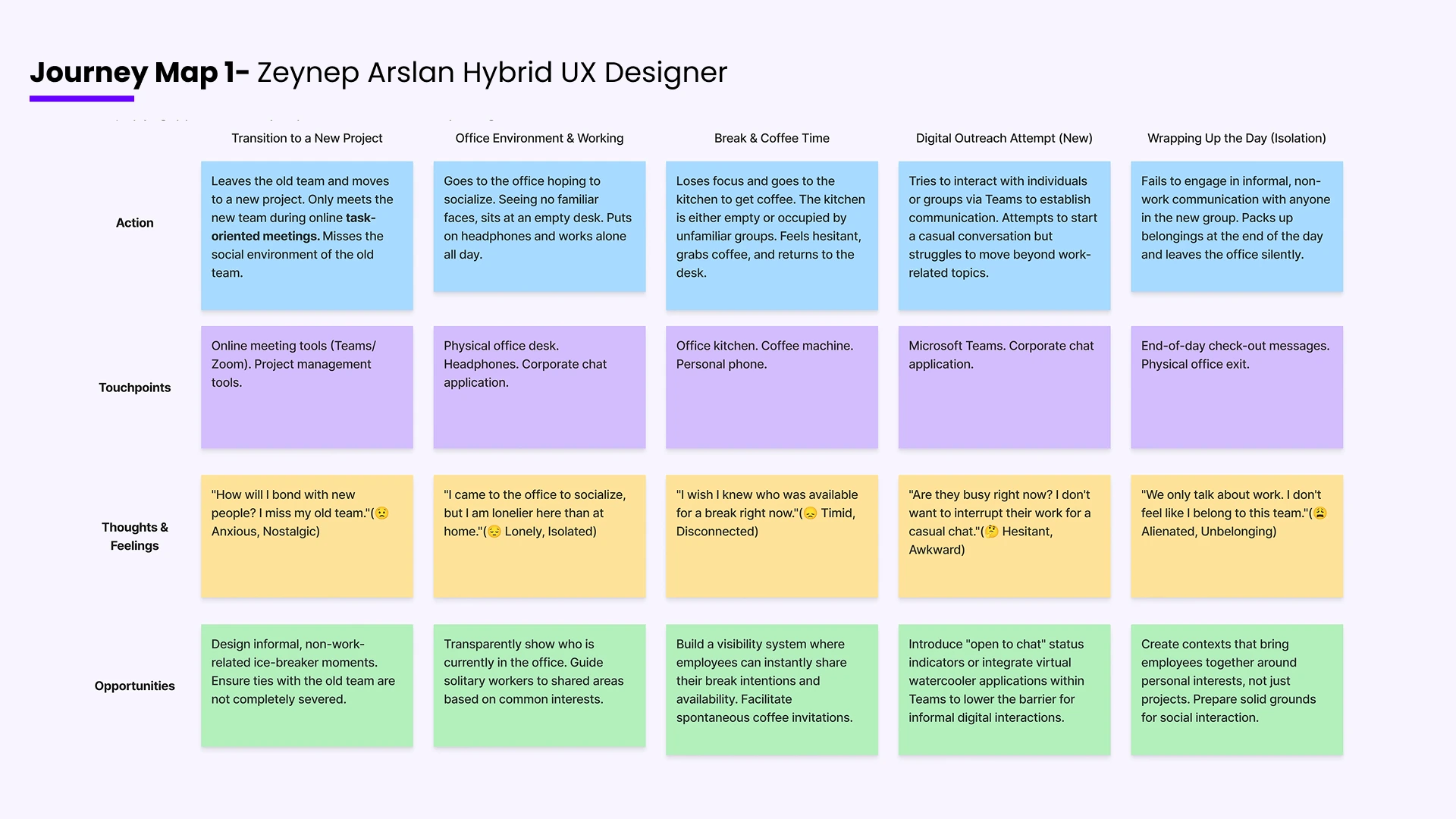
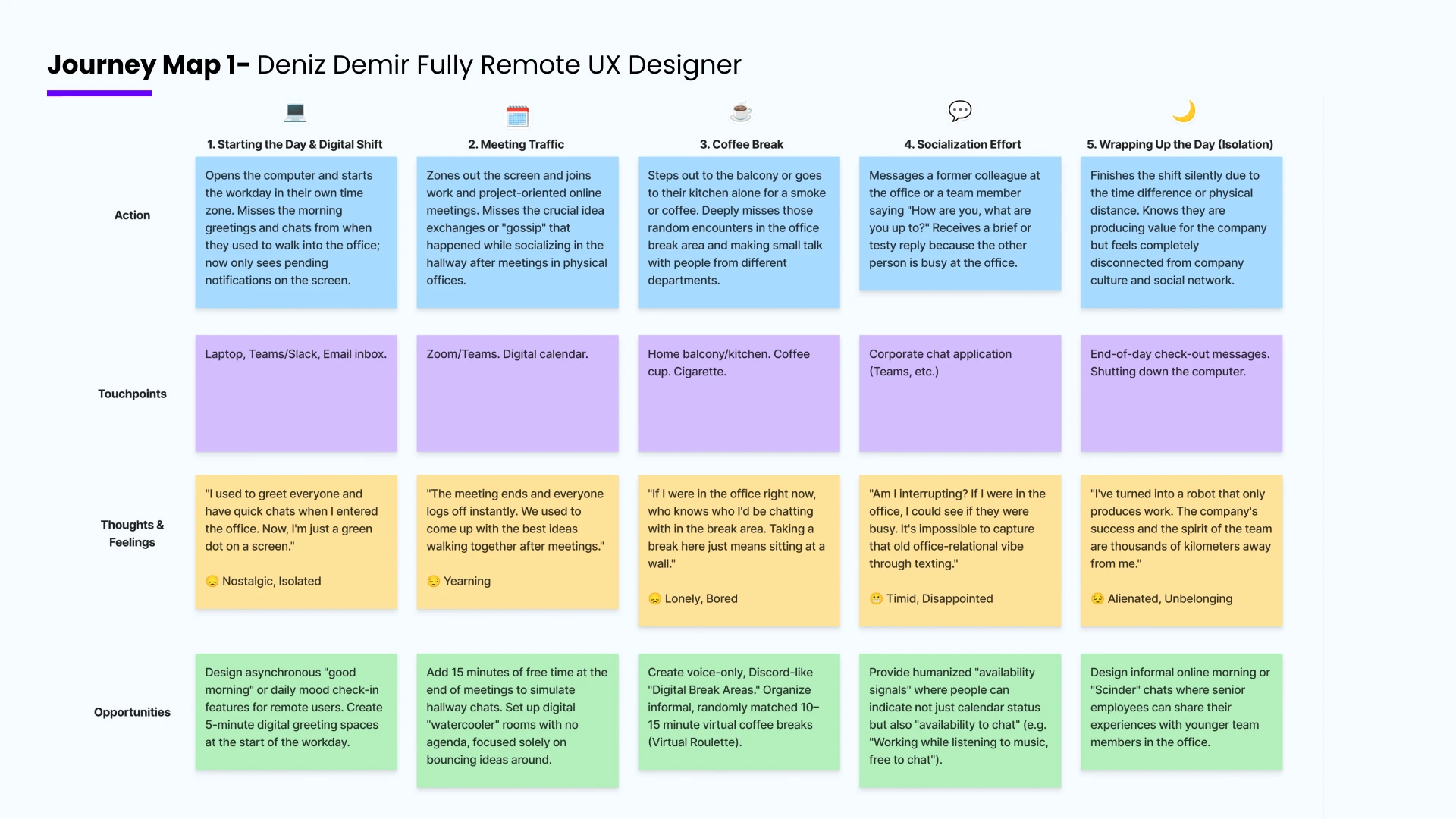
Remote workers lose the natural office interactions that build sustainable bonds and team visibility. They need low-pressure, spontaneous ways to socialize from onboarding through daily work and after-hours moments.
A six-week process moved from research and synthesis through iterative interface design, usability testing and final prototyping.
Desk Research
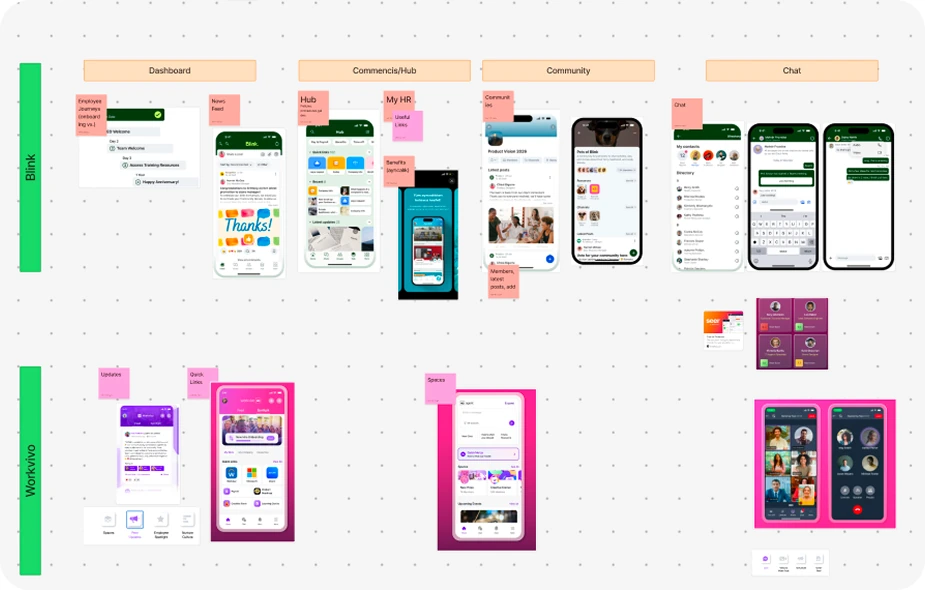
Benchmark
Survey
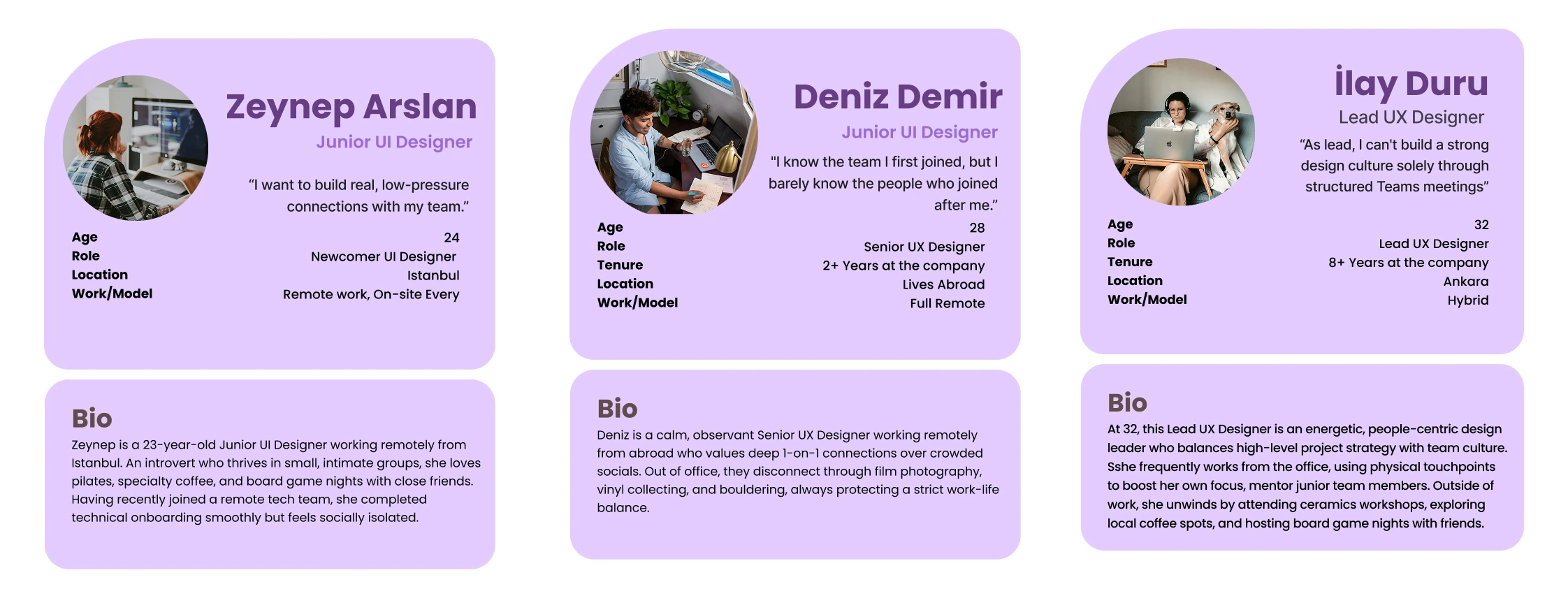
Persona Generation
Benchmark
Journey Map
Info Architecture
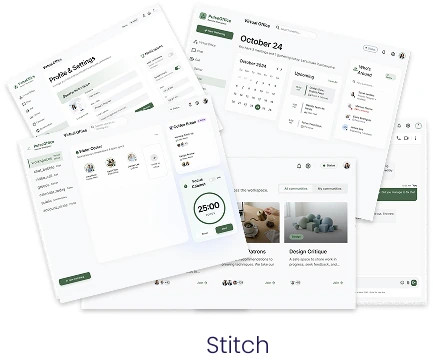
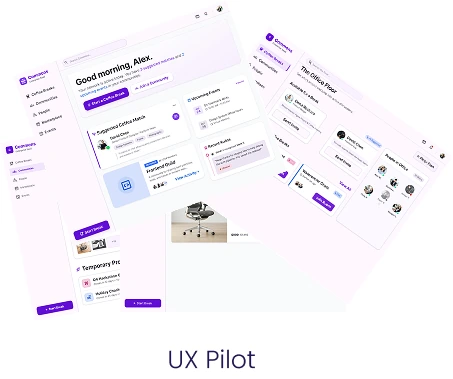
AI Wireframe Trial
Info Architecture
Vibe Coding Wireframes
Usability Test
UI Executing
Prototyping
UI Executing
Prototyping
Case Preparation
Multiple research streams were combined to understand remote-work behavior, existing products and the moments where social connection breaks down.

The rates of regular adoption and daily workflow usage by employees remain quite low.
Social media feeds (Blink, Workvivo) or game-like maps (Gather.town) are used to speed up adaptation.
The majority of the benchmarks are not going beyond productivity, similar to Teams and Slack.
The findings pointed toward small, spontaneous and interest-led interactions rather than more crowded, formal meetings.
missed spontaneous water-cooler interactions the most.
preferred micro-gatherings of two or three people over crowded events.
struggled with losing informal touchpoints with other teams.
Cold interactions fail. Common hobbies, topics and automated facilitation can make connection feel more organic.
Without structured re-engagement, a divide can persist between original teams and new hires.
Morphological exploration, Round Robin, persona work, journey mapping and edge-case definition translated the research into a coherent product direction.
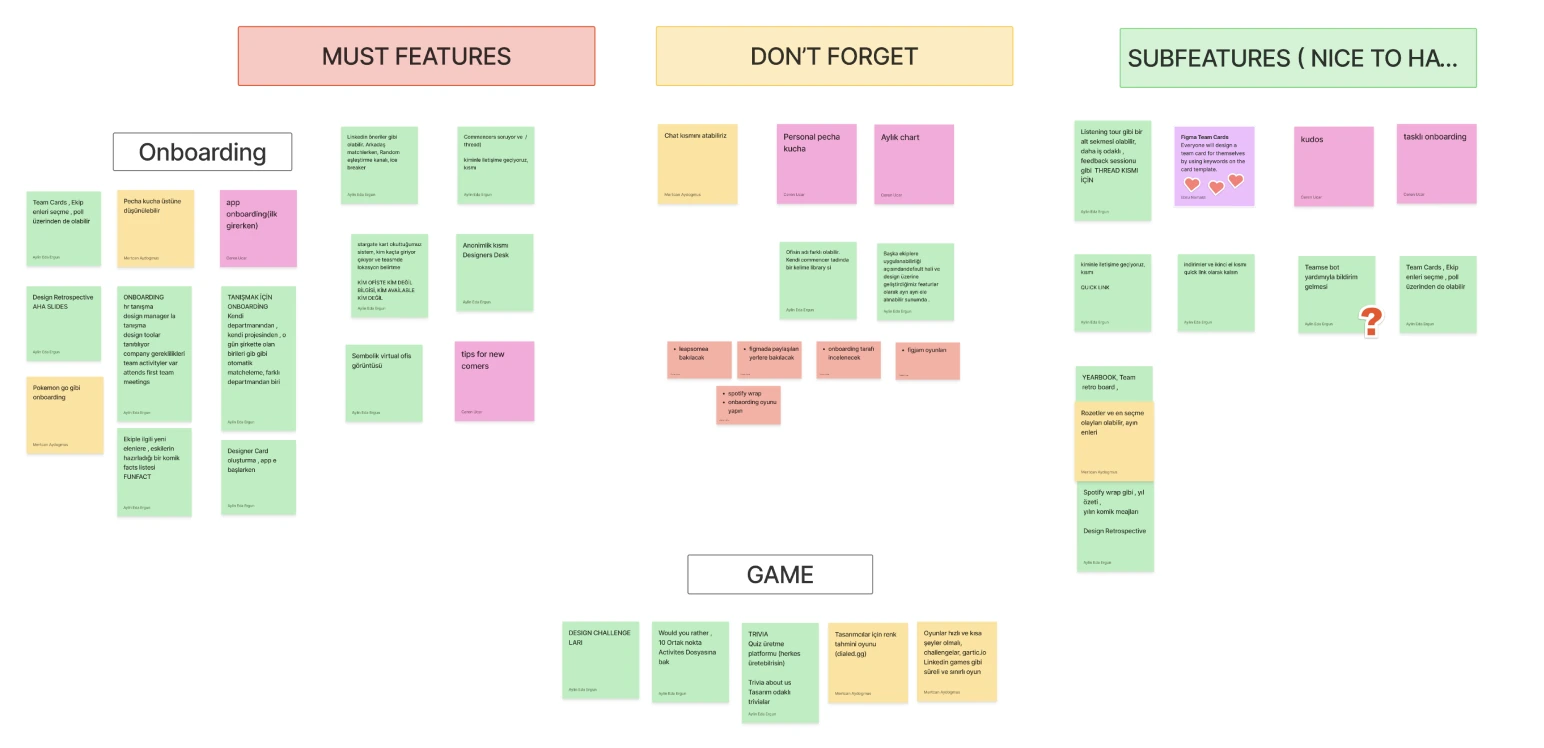
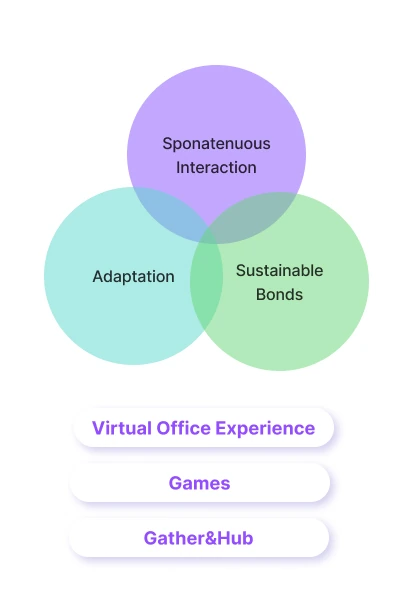
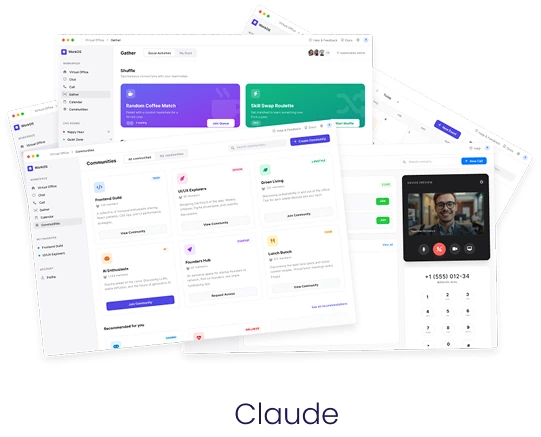
The concept expanded into connected mobile and desktop experiences for break rooms, events, communities and common-interest matching.
Different break rooms like water cooler chats, coffee breaks etc. can be reachable.
To check events, other meetings, break rooms etc.
Interest and project based groups, different communities can be seen here.
Common points based system matching people as friends.
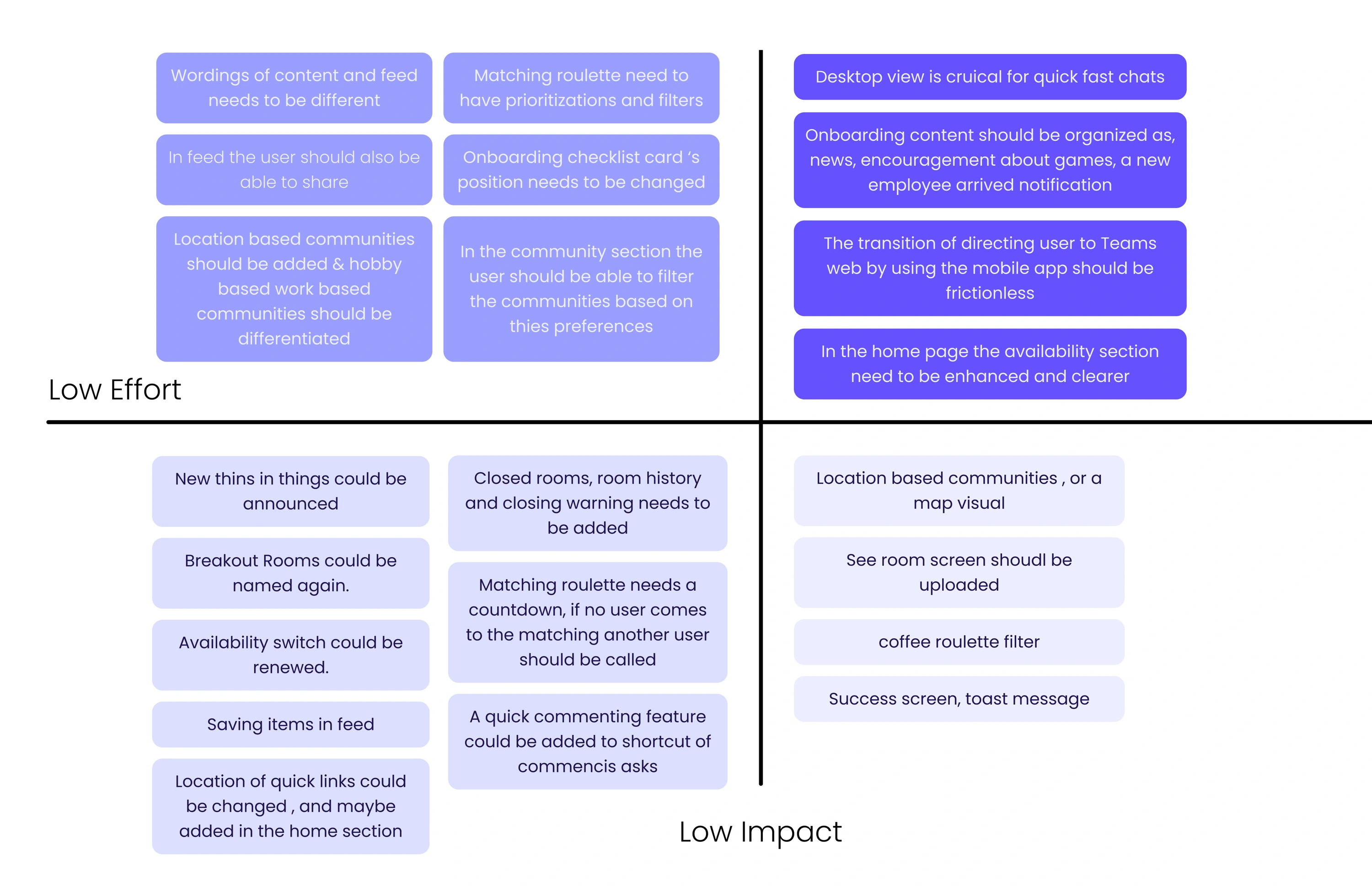
We carried out our qualitative, moderated study using the “think-aloud” protocol, both online (via Teams) and face-to-face.
We carried out our qualitative, moderated study using the “think-aloud” protocol, both online (via Teams) and face-to-face.
We carried out our qualitative, moderated study using the “think-aloud” protocol, both online (via Teams) and face-to-face.
A compact system brought the cross-platform experience together through shared color, typography and interface components.
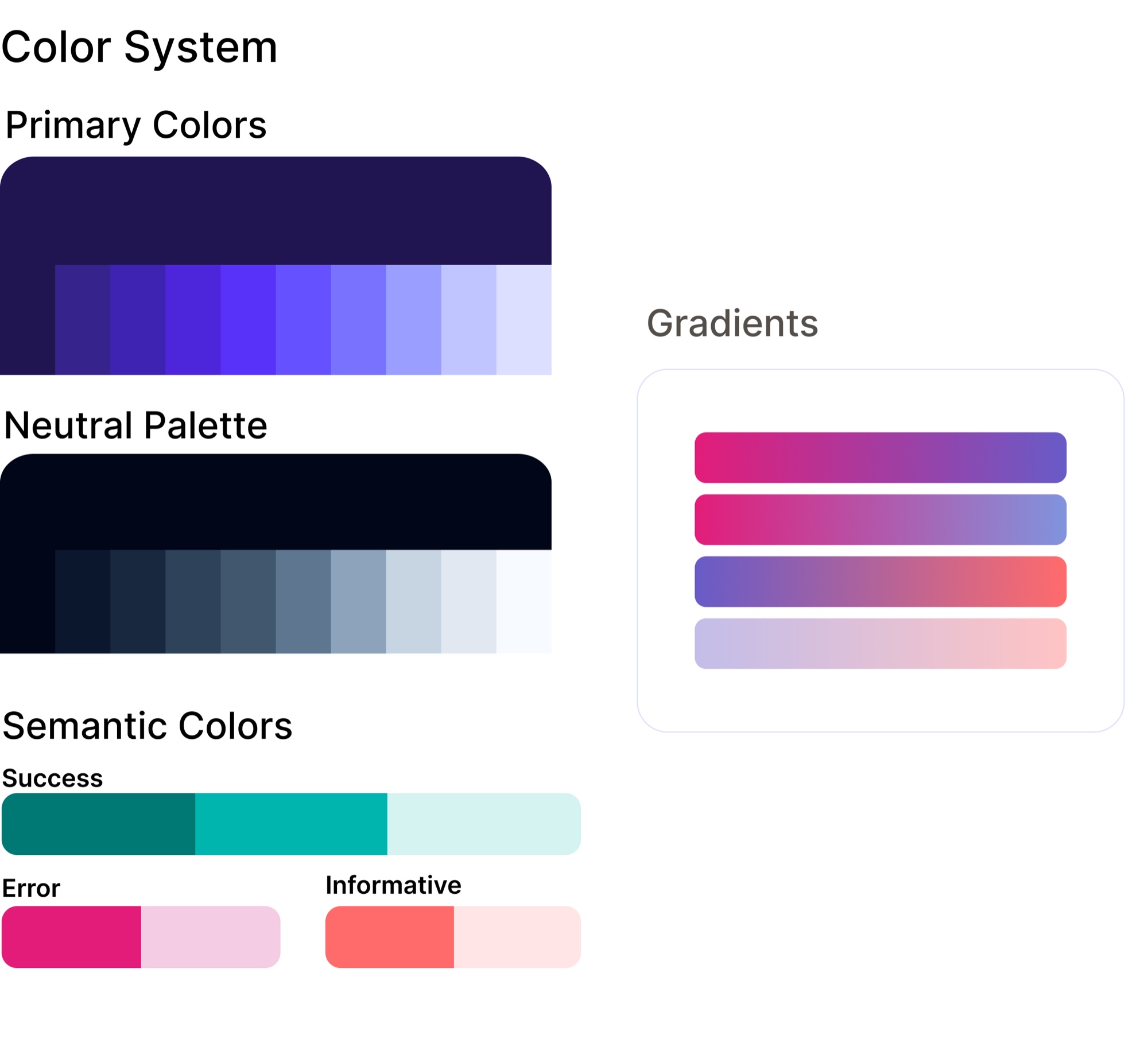
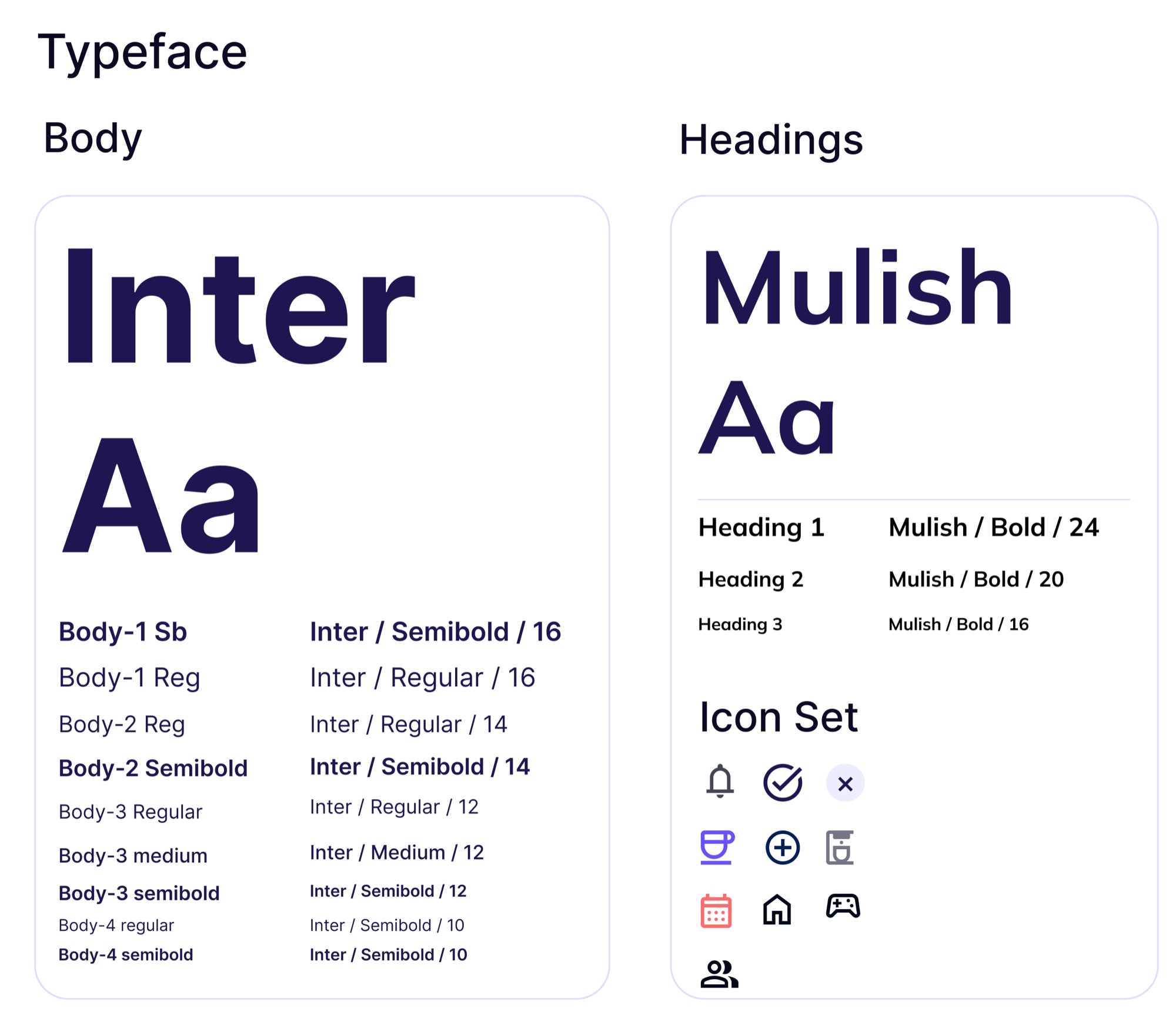
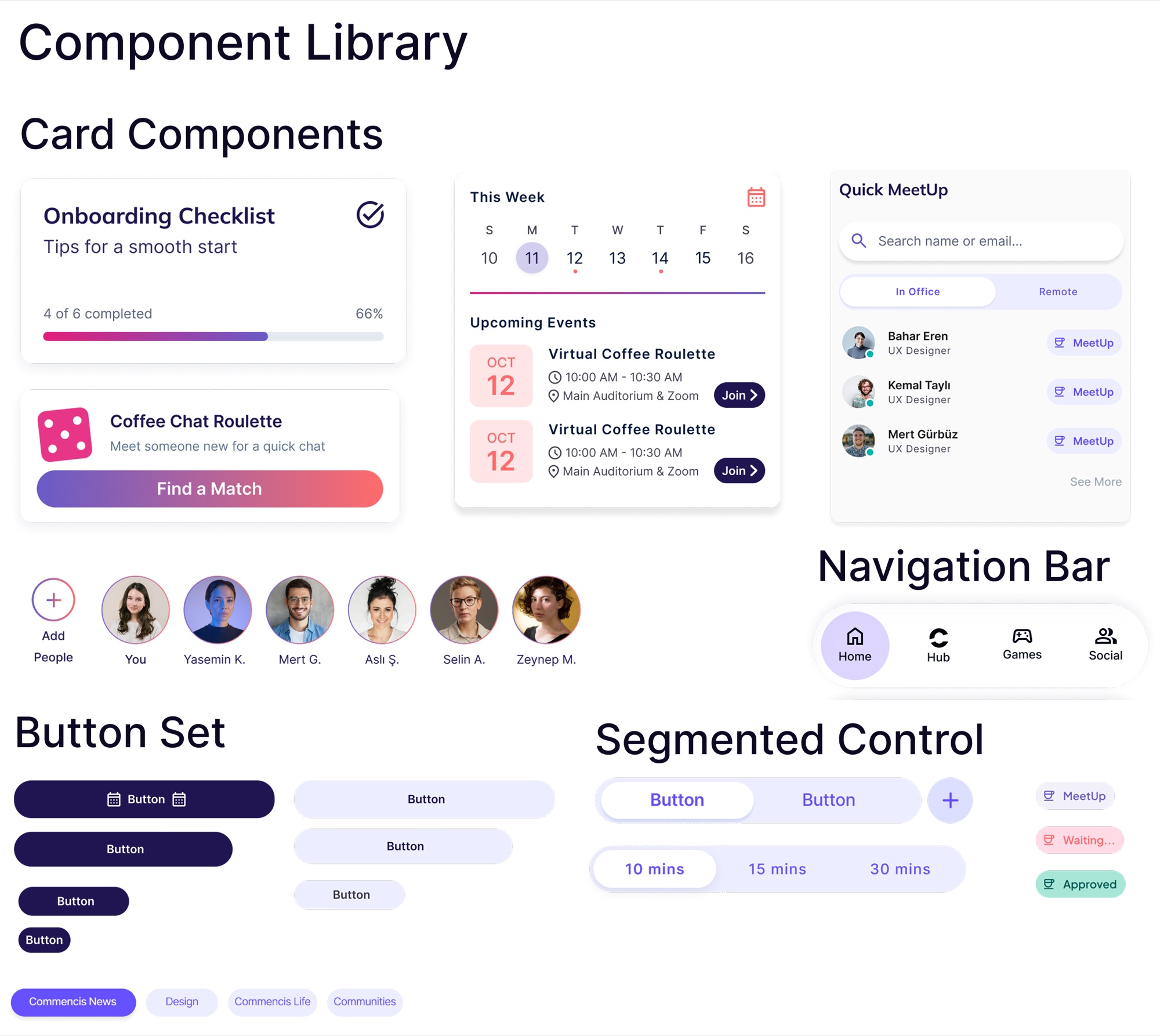
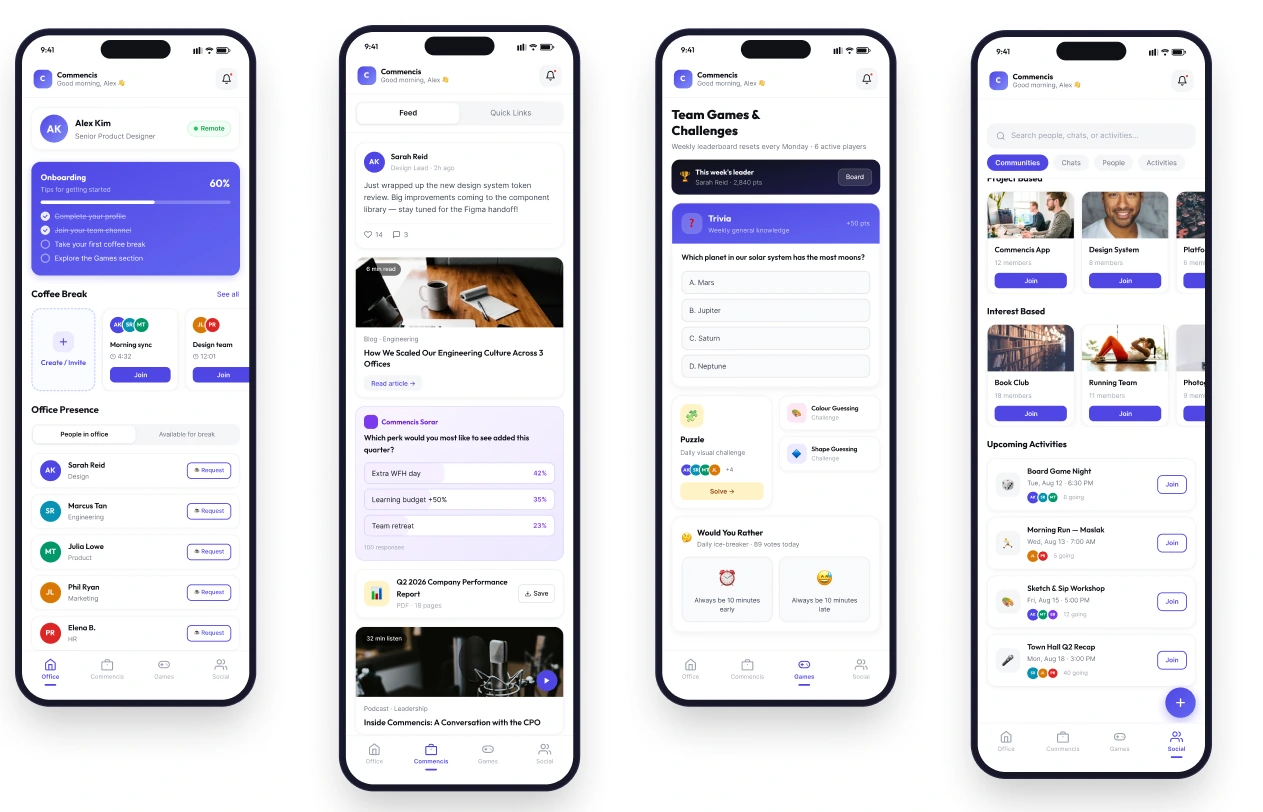
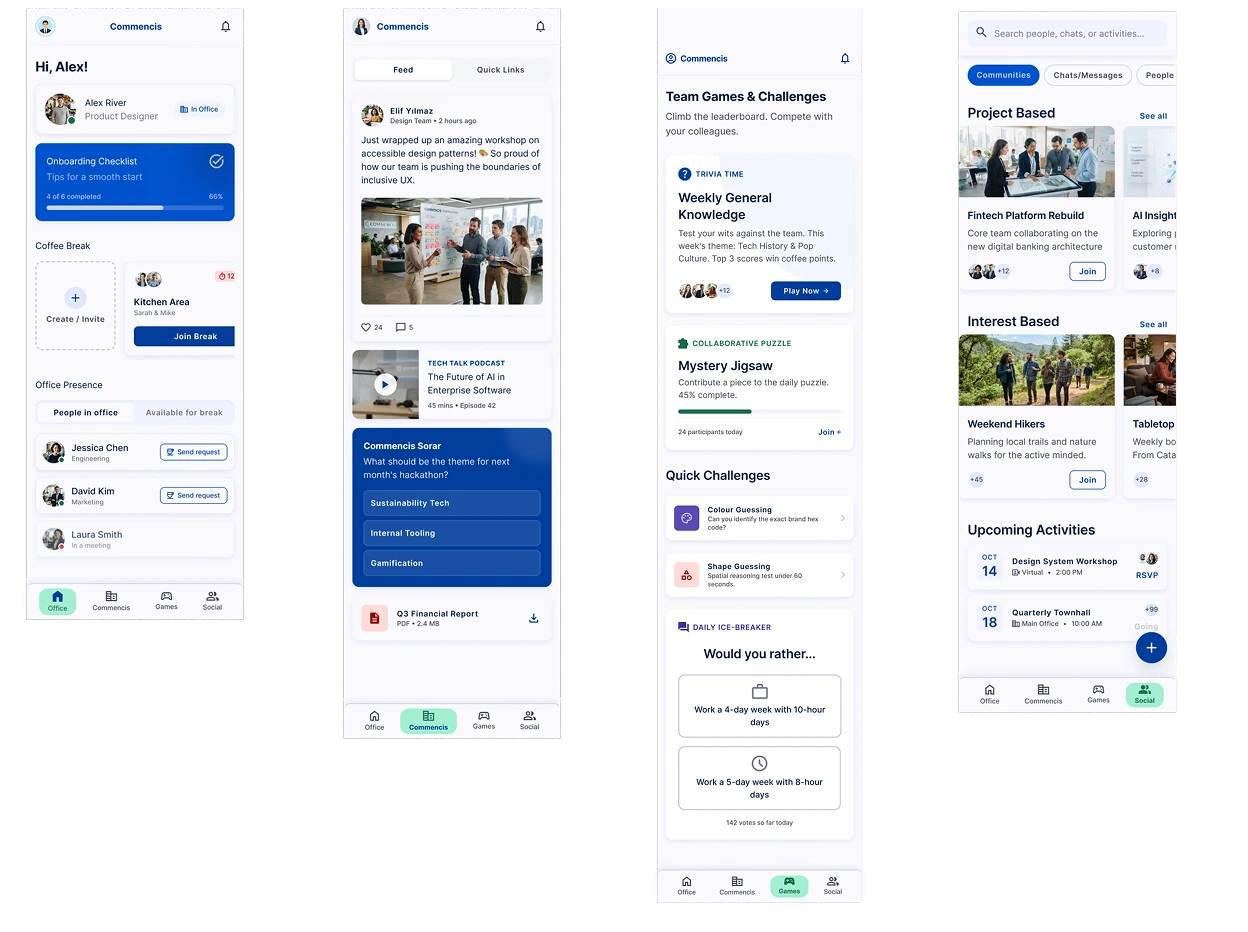
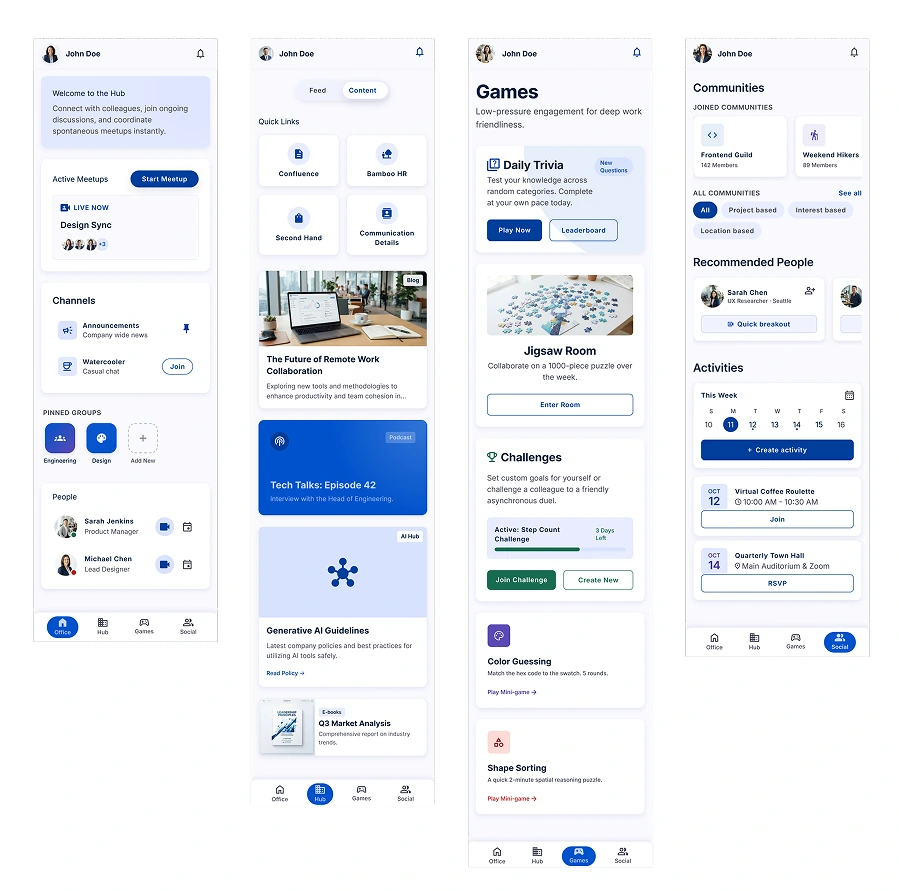
The mobile experience brings everyday connection into four clear areas: Home, Hub, Games and Social.
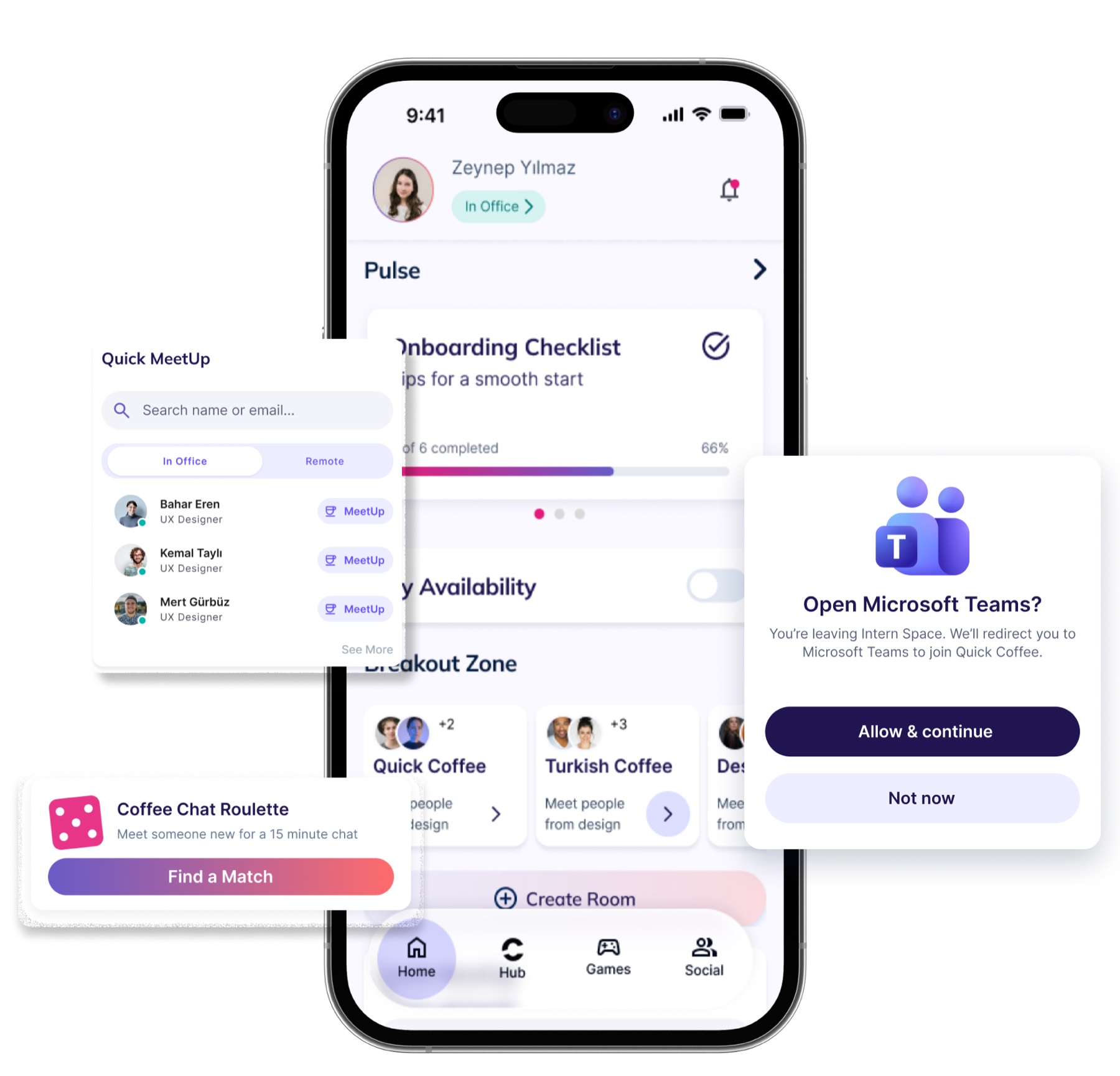
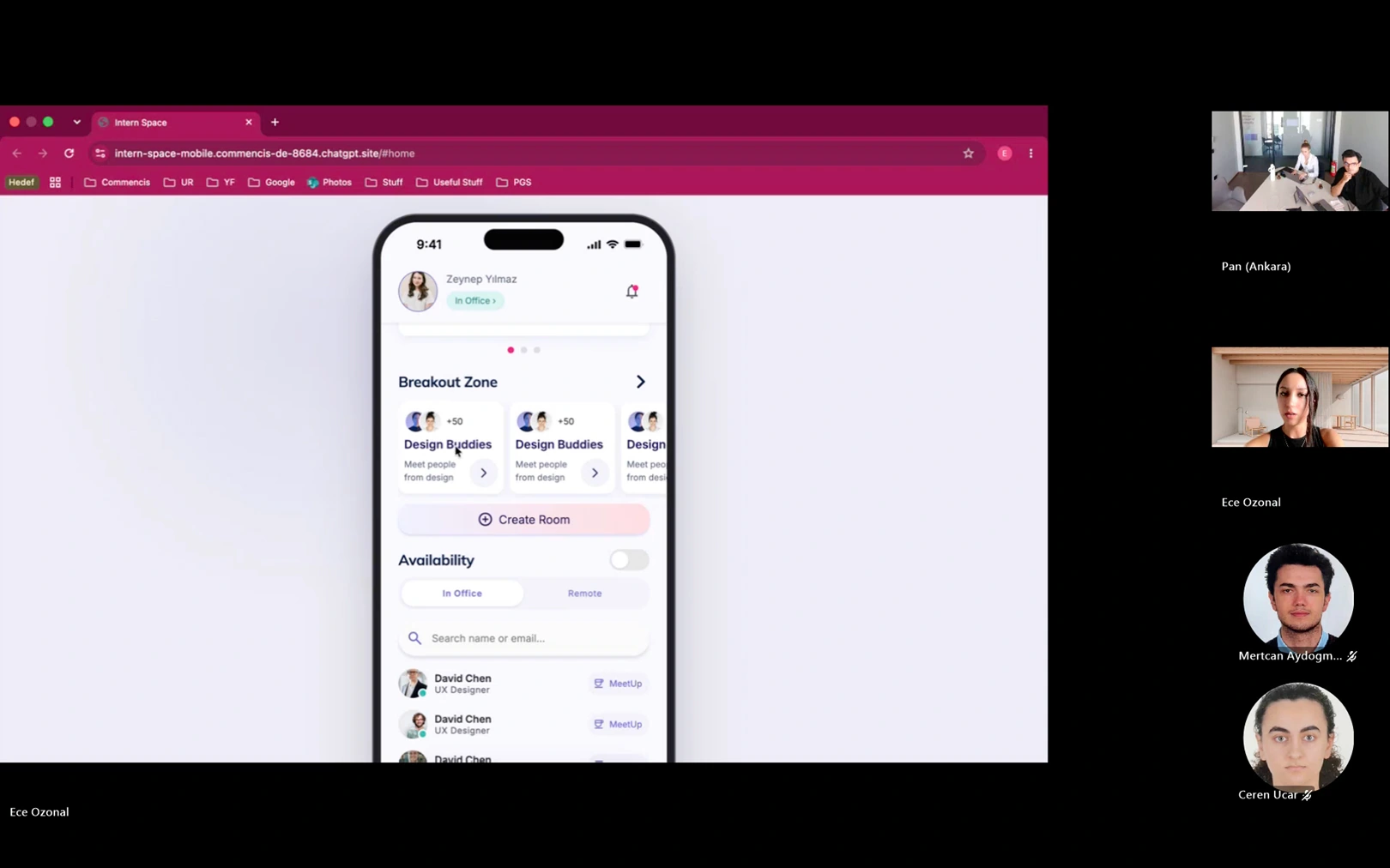
A pulse section welcomes users with news and onboarding, followed by the breakout zone where people get into rooms through Teams.
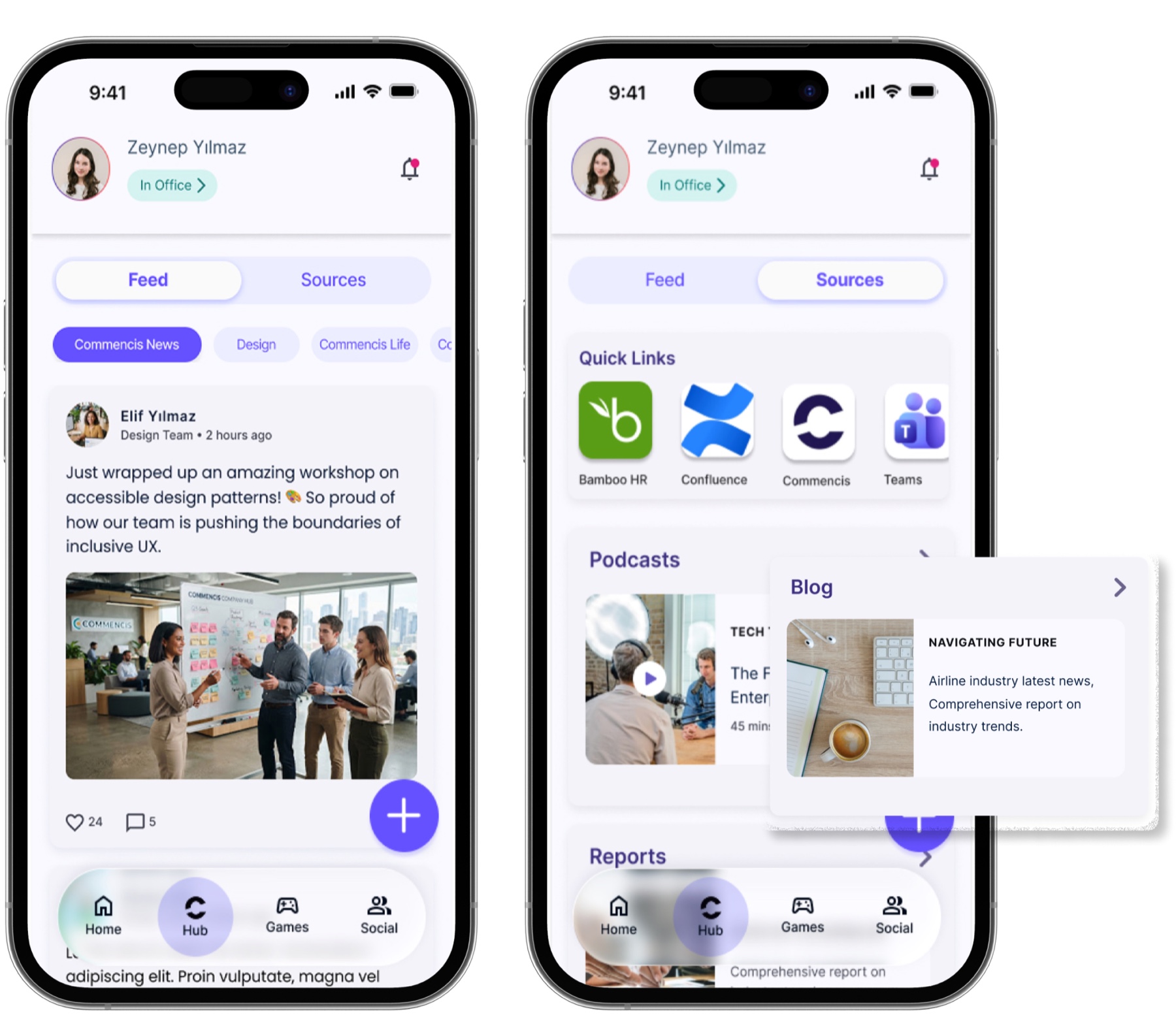
Hub is divided into two segments where feed shows company news and announcements. Sources part is enhanced with content shared by company and quick links.
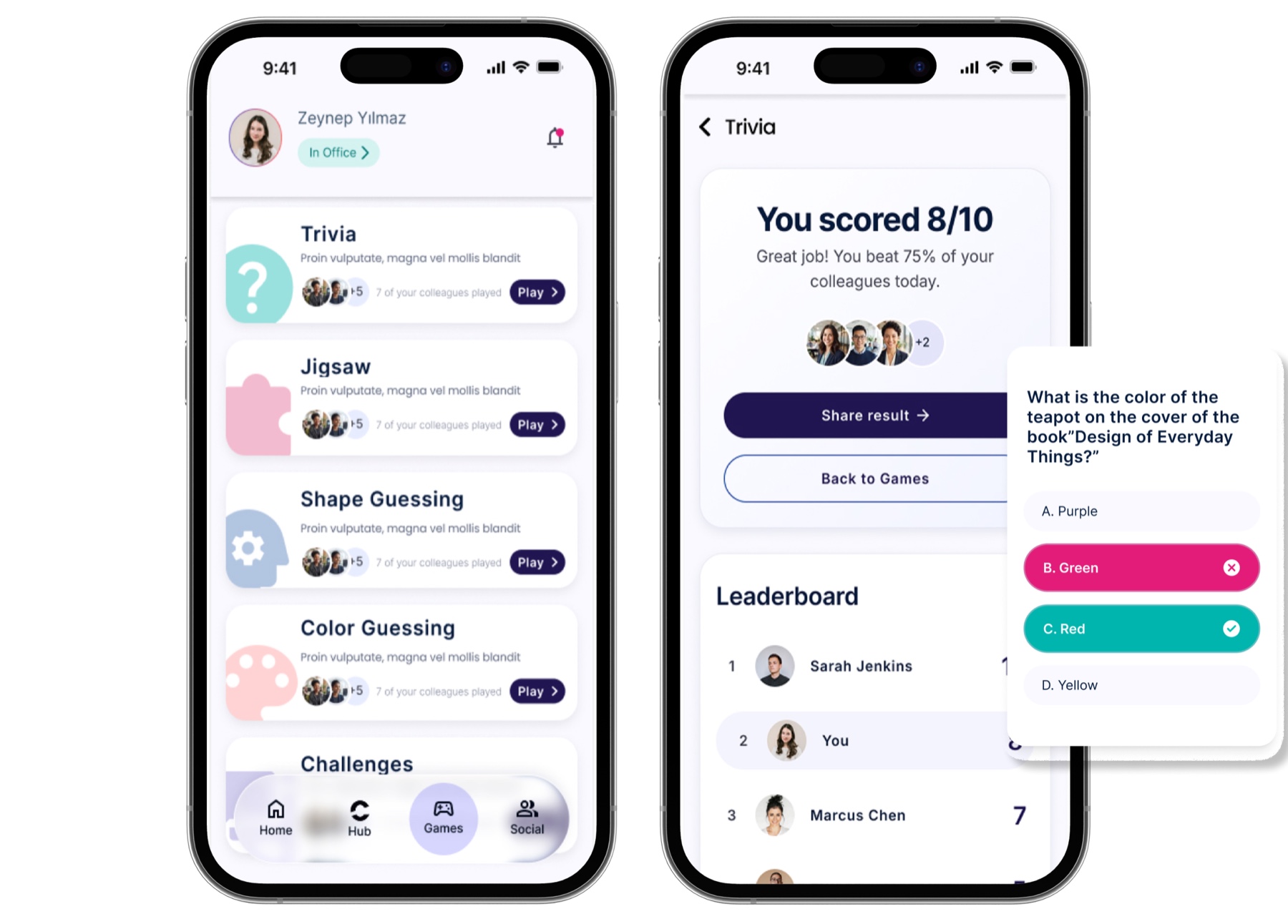
Games part enhances the break-time and created collaborations and interactions between people with leaderboards, and commonly created challenges etc.
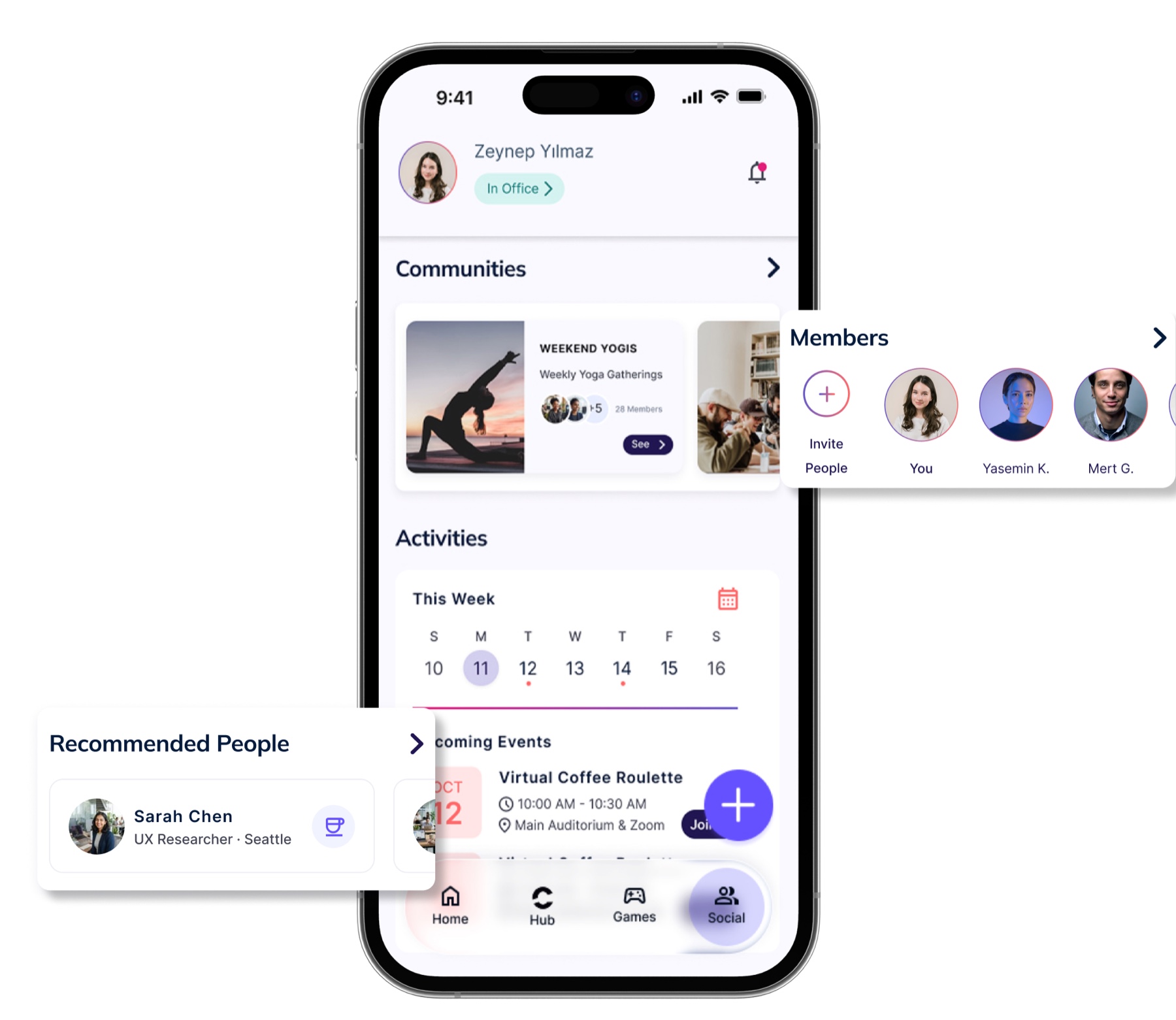
Social includes the company communities where people can meet, gather, arrange events together. Commencers ask part also creates a free environment where people can share randomly.
The desktop experience carries communities, quick chats and shared team moments into the workday. A Coffee Chat flow was then developed through vibe coding and prototyping.
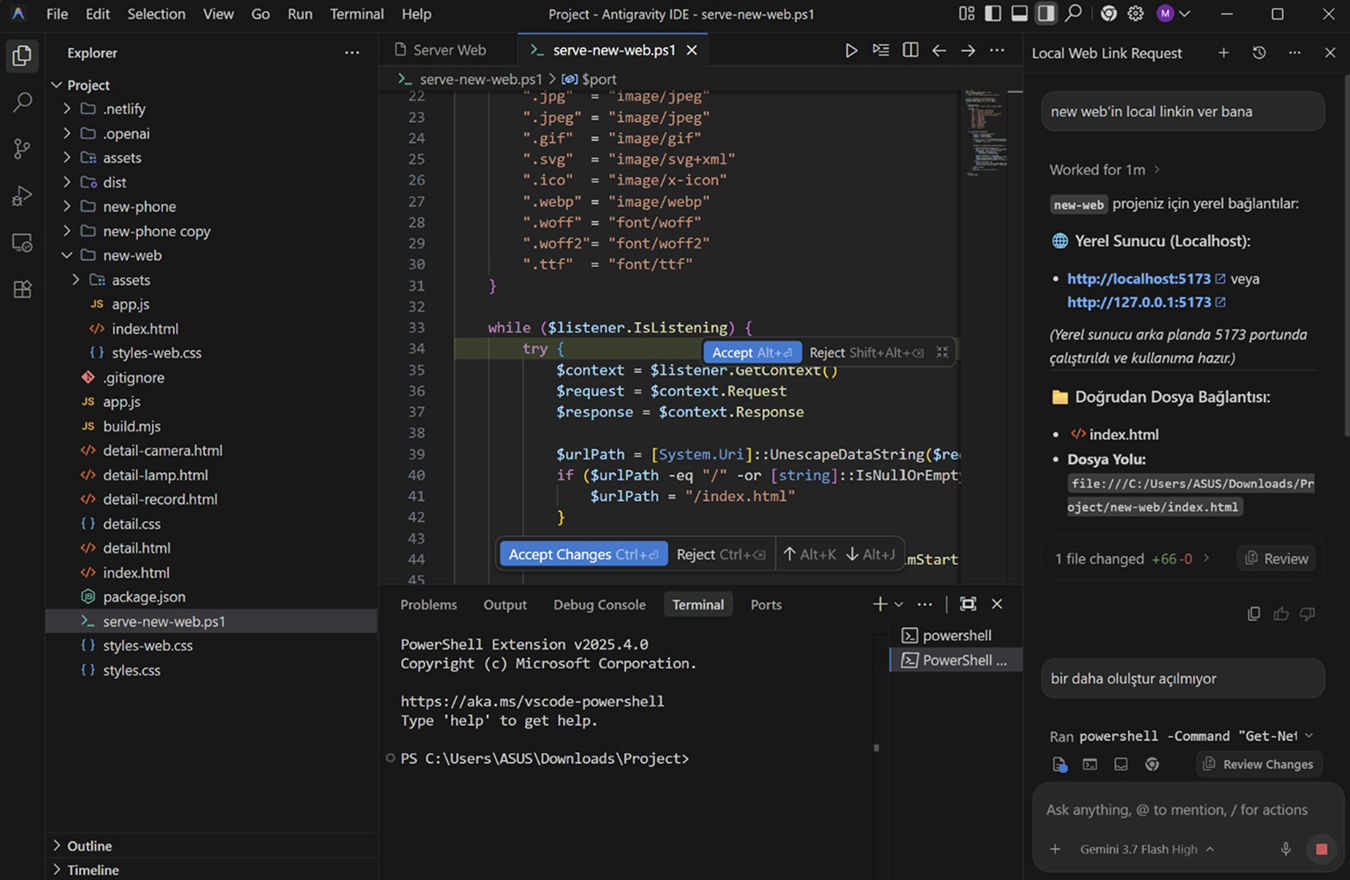
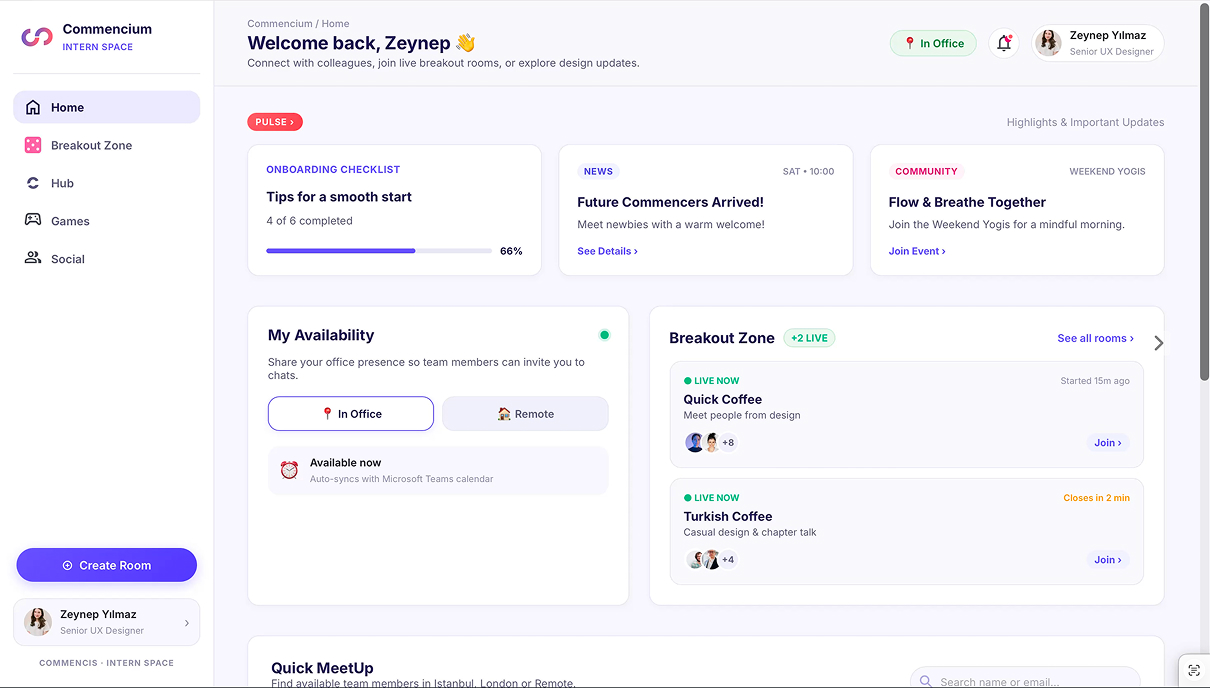
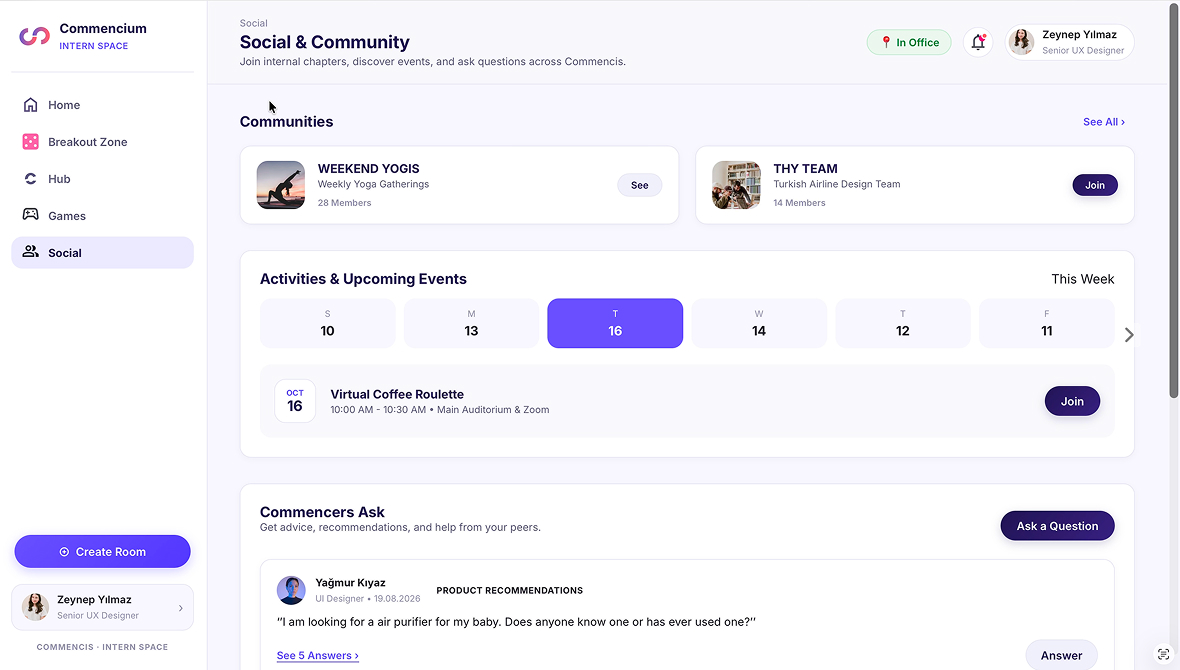
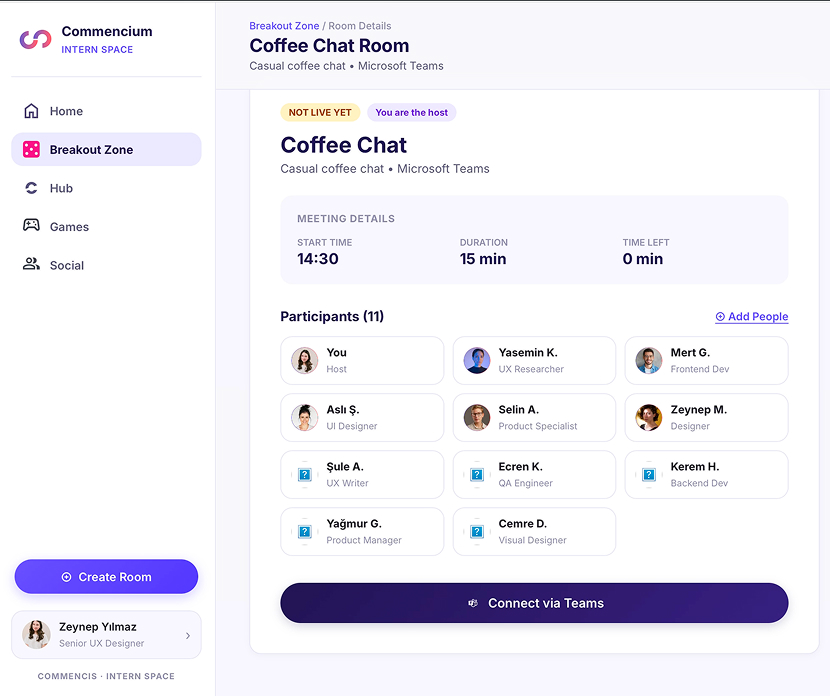
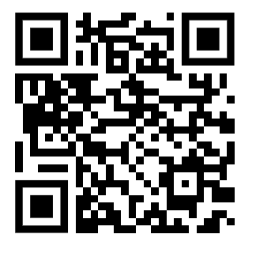
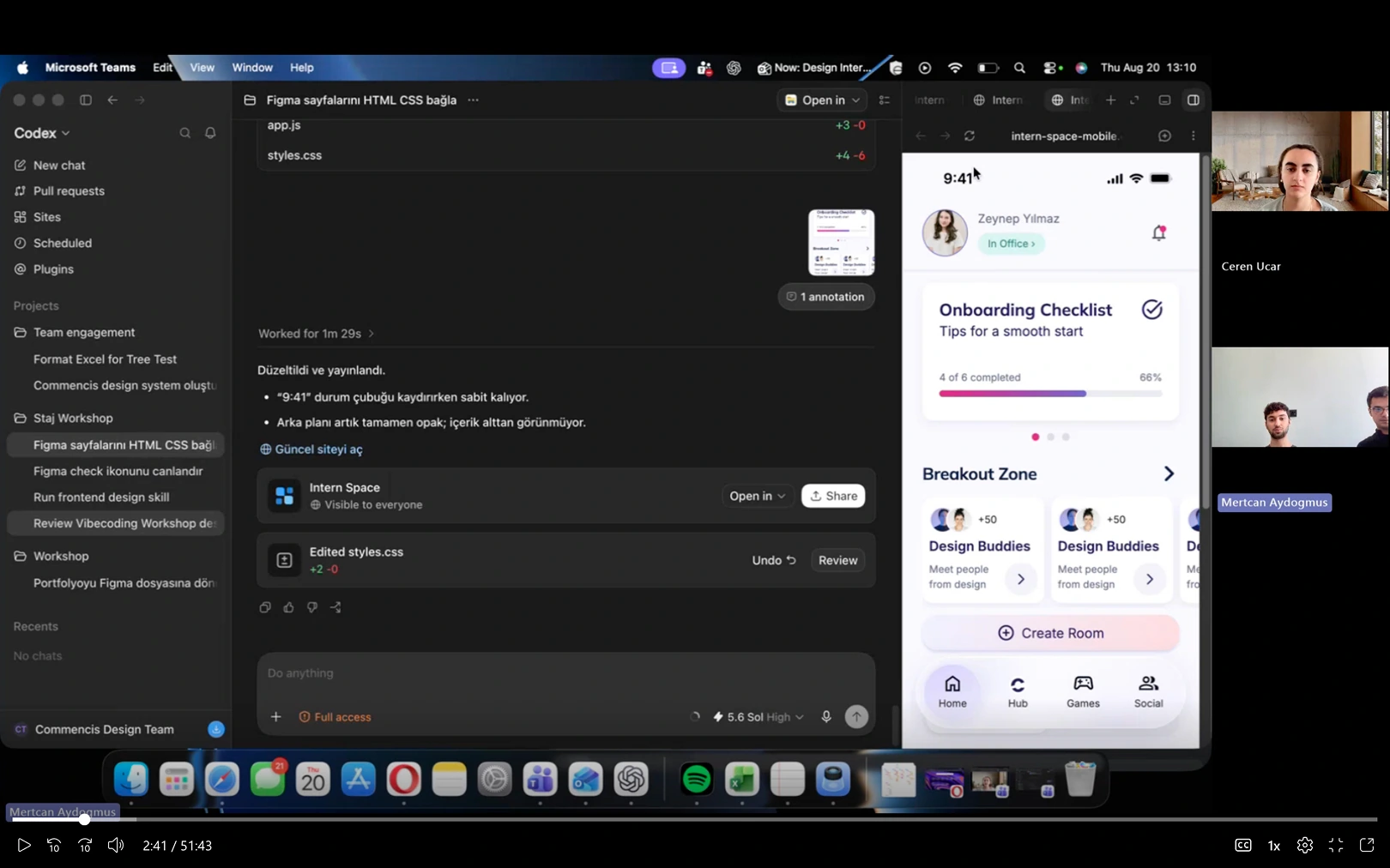
We utilized multiple AI tools in this project. Finally, since we ran out of tokens on Codex, we vibe-coded the current version with the help of Antigravity and published it via Netlify.

Planning & presentation preparation
Vibe coding

Vibe coding

Planning & UX writing
Wireframe generation
Wireframe generation
UX Writing

Usability testing & Animations